
Square D
QO and Homeline panelboards for distribution, I-Line switchboards and switchgear for main service and large-format commercial applications.
Panel and switchgear work is the backbone of every commercial electrical project. We handle the full scope — engineering support, equipment procurement, installation, testing, and inspection — so your building has reliable power distribution from the service entrance through every branch circuit.
Panel and switchgear projects require careful sequencing — especially when the building stays partially occupied. We plan each phase around your operations, utility schedules, and inspection windows so energization happens on time.
We walk the existing electrical infrastructure — service size, panel locations, available spare capacity, and physical constraints. Load data from the owner or engineer is reviewed against field conditions before any equipment is specified.
Load calculations, one-line diagrams, and panel schedules are prepared or reviewed for permit submittal. We confirm breaker sizes, feeder ampacities, and working clearances meet NEC and local amendments before ordering gear.
Switchboards, panels, transformers, and breakers are ordered to match the approved submittal. Lead times on large switchgear can run several weeks — we track delivery and coordinate with the GC on pad prep, rigging access, and electrical room readiness.
Shutdown windows are scheduled with the owner, tenants, and utility. We stage the work — pre-wiring feeders, setting switchgear, and swapping panels — to minimize outage duration. Temporary power is arranged when the scope requires it.
Megger testing, torque verification, phasing checks, and functional testing of breakers, transfer switches, and metering. Results are documented for the owner and inspection package before the system is energized.
Rough and final inspections are coordinated with the AHJ. As-built panel schedules, arc-flash labels, and O&M documentation are delivered at closeout. We stay available through utility energization if a service upgrade is part of the scope.
Panel upgrades and switchgear installations are permit-driven work. Every jurisdiction in the Bay Area requires plan check and field inspection for distribution changes, and service-size increases add a utility coordination layer on top of the electrical permit.
Commercial panel and switchgear installations must meet NEC Article 408 (switchboards and panelboards), Article 450 (transformers), and Article 230/240 (services and overcurrent protection). Working clearances, grounding, and labeling requirements vary by equipment type and location — indoor, outdoor, or hazardous area. We confirm the applicable articles and local amendments during plan review.
Electrical permits are required for panel upgrades, new switchgear, and service changes in every Bay Area city and county we work in. Submittals typically include load calculations, one-line diagrams, panel schedules, and equipment cut sheets. Plan check timelines range from a few days to several weeks depending on jurisdiction and scope complexity.
When a panel upgrade requires a larger service, we coordinate with PG&E or the local utility on the service application, meter placement, CT cabinet requirements, and trenching for new underground service. Utility lead times and energization schedules are tracked alongside the electrical permit so both paths converge on the planned shutdown date.
New and upgraded switchgear may require arc-flash hazard labeling and updated one-line diagrams per NFPA 70E and OSHA requirements. We provide panel directory labeling, circuit identification, and arc-flash stickers at closeout so the owner’s maintenance team has accurate information for lockout/tagout procedures.
We work with the commercial-grade panel and switchgear manufacturers specified on most Bay Area TI and industrial projects. Equipment is matched to your engineer’s spec, existing gear compatibility, or availability — not residential smart-panel products.
QO and Homeline panelboards for distribution, I-Line switchboards and switchgear for main service and large-format commercial applications.
Panelboards, switchboards, and breakers for commercial and industrial distribution — matched to existing Siemens gear for seamless expansion.
Compression lugs, connectors, and grounding hardware for feeder terminations, bus connections, and transformer bonding.
Disconnect switches, metering equipment, and commercial wiring devices for service entrance and distribution applications.
Our panel and switchgear work ranges from single distribution panel swaps to 2500A switchboard installations. Timelines run from one day for a straightforward panel replacement to eight weeks for large switchgear projects with engineering, long-lead equipment, and utility coordination.
Panel swaps are handled by a two- to three-person crew. Switchboard and switchgear installations typically require a four- to six-person crew with rigging support for large gear, plus a foreman who coordinates shutdowns and inspection scheduling with the GC and owner.
Recent commercial and industrial panel installations — from distribution upgrades and conduit runs to switchgear and transformer work across the Bay Area.
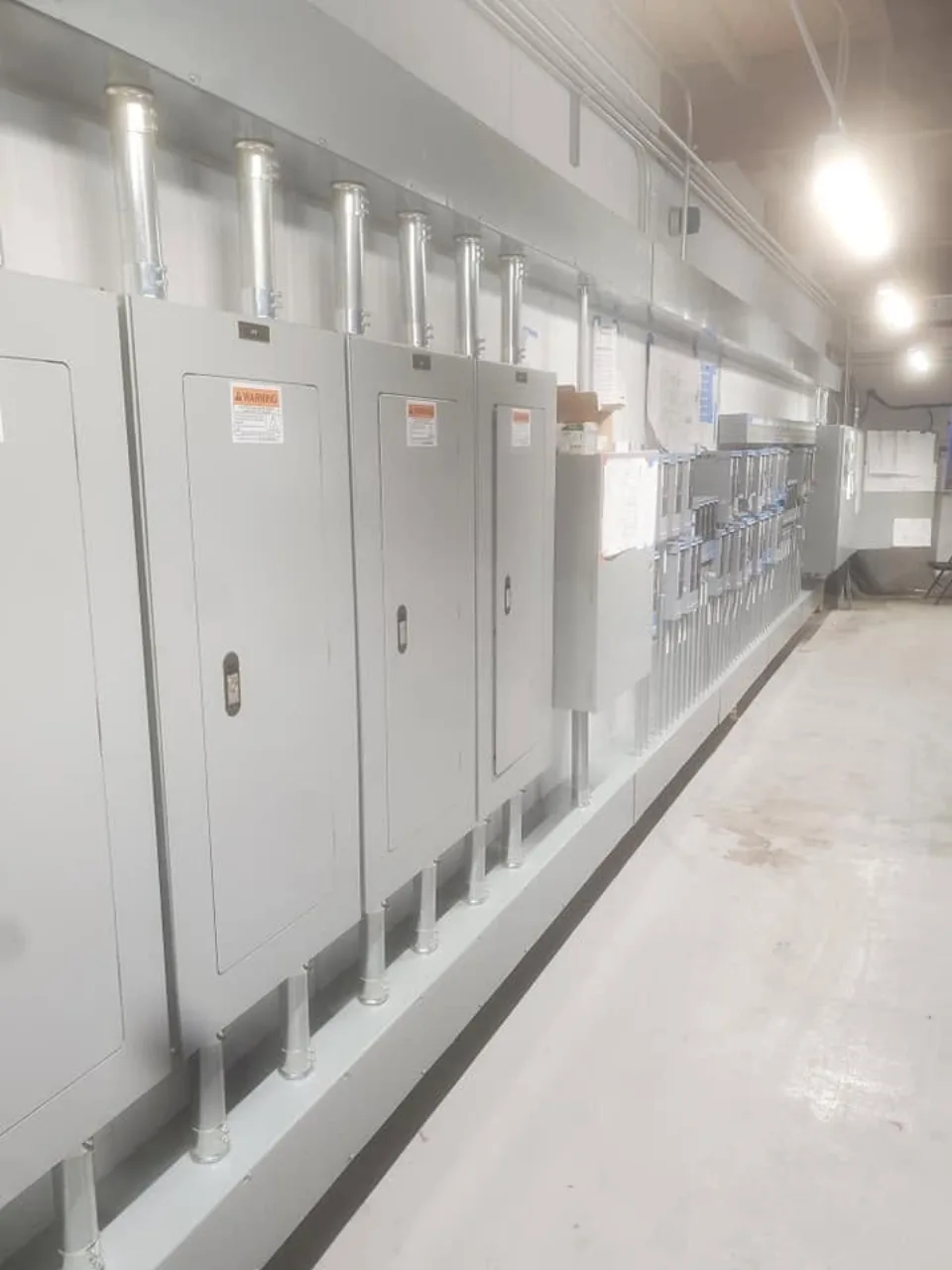
Main distribution · Bay Area
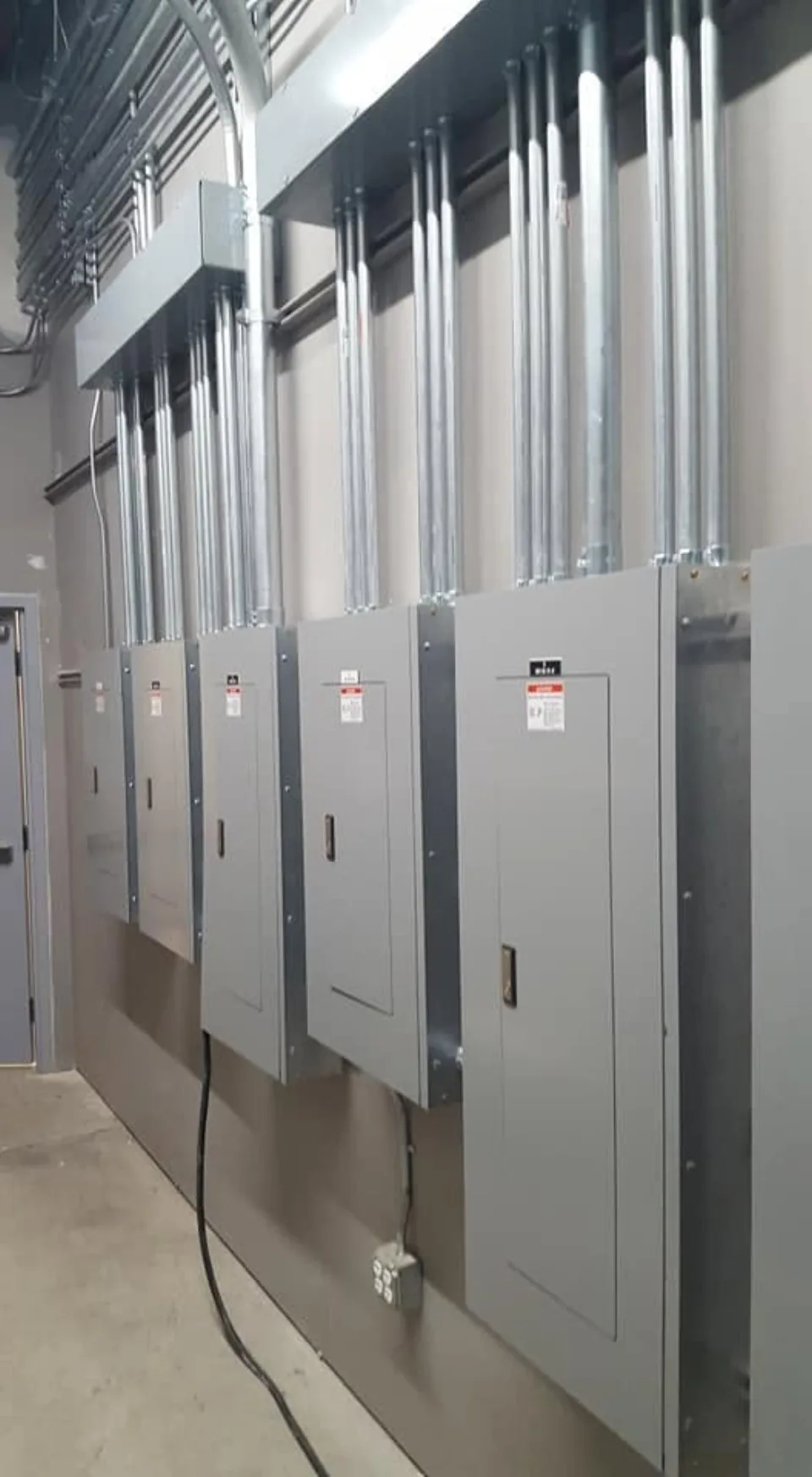
Feeder routing to tenant spaces
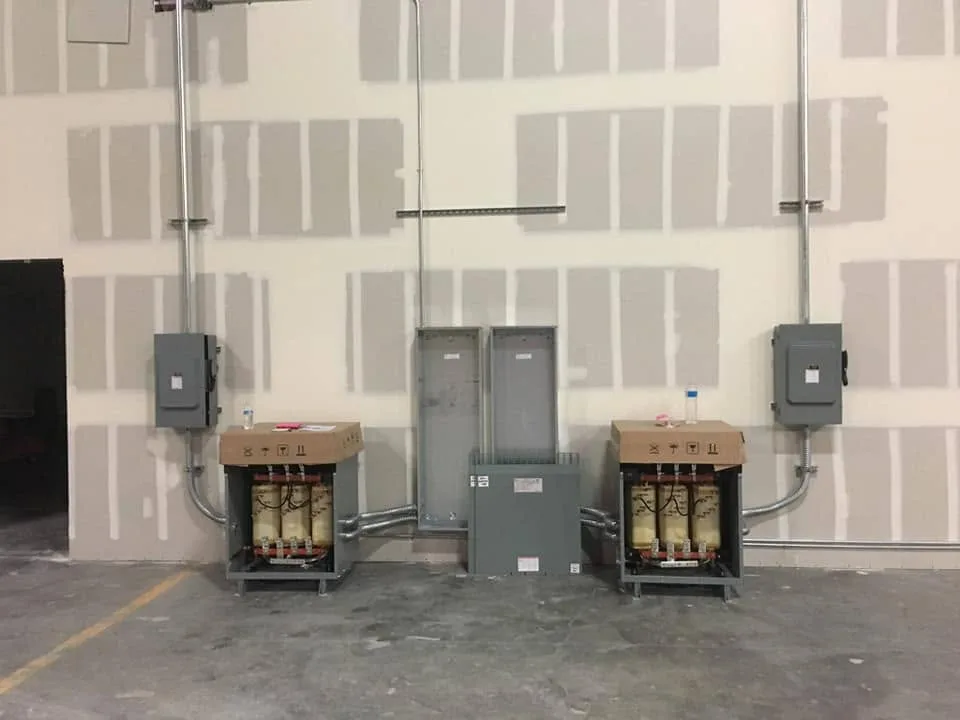
Industrial tenant improvement

Commercial build-out distribution
Panel upgrades and power distribution show up across every commercial sector we serve. These are the industries where panel and switchgear work is most common on our projects.
Kitchen equipment loads, hood power, and dining room distribution upgrades
Learn more arrow_forward apartmentMulti-tenant panel upgrades, sub-metering, and common-area distribution
Learn more arrow_forward warehouseHigh-bay service upgrades, switchgear, and process power distribution
Learn more arrow_forwardBased in Fremont, we handle panel upgrades and switchgear across the entire San Francisco Bay Area. See all service areas →
In many cases, yes. We plan staged shutdowns — isolating one distribution panel or feeder at a time so occupied tenants or production areas stay powered. For larger switchgear replacements, a full-building shutdown may be unavoidable, but we coordinate the outage window with your operations team, utility, and any generator or UPS backup so downtime is minimized and predictable.
A straightforward panel swap in an existing enclosure can often be completed in one to two days. Larger distribution upgrades, new switchboard installations, or projects requiring utility service changes typically run one to four weeks depending on equipment lead times, permit approval, and shutdown coordination. A full switchgear replacement with engineering and commissioning may extend to six to eight weeks.
Yes. When a panel upgrade triggers a service size change — new meter, CT cabinet, or transformer — we coordinate with PG&E or the local utility on the service application, trenching requirements, and energization schedule. We handle the electrical scope on our side and keep your GC or owner informed on utility milestones and inspection dates.
We install Square D (QO, Homeline, and I-Line switchboards and distribution gear), Siemens panels and switchgear, Burndy connectors and lugs, and Hubbell disconnects and metering equipment. We match the manufacturer to your existing gear, engineer’s specification, or availability. We do not install residential smart-panel products like Tesla, Span, or Franklin.
Yes. Panel upgrades, switchgear installations, and service changes require electrical permits in every Bay Area jurisdiction we work in. We prepare the permit submittal — load calculations, panel schedules, one-line diagrams — and coordinate rough and final inspections with the AHJ so the work is signed off before energization.
Email your one-line diagrams, panel schedules, and load calculations — our estimating team will scope the panel and switchgear work and respond with a commercial quote.